Don't miss our holiday offer - up to 50% OFF!

Keep it dry
Avoid prolonged rain and never soak a leather jacket for cleaning.
Don't miss our holiday offer - up to 50% OFF!
Care Guide
Thoughtful cleaning, conditioning and storage can help preserve the character, comfort and structure of your leather jacket.
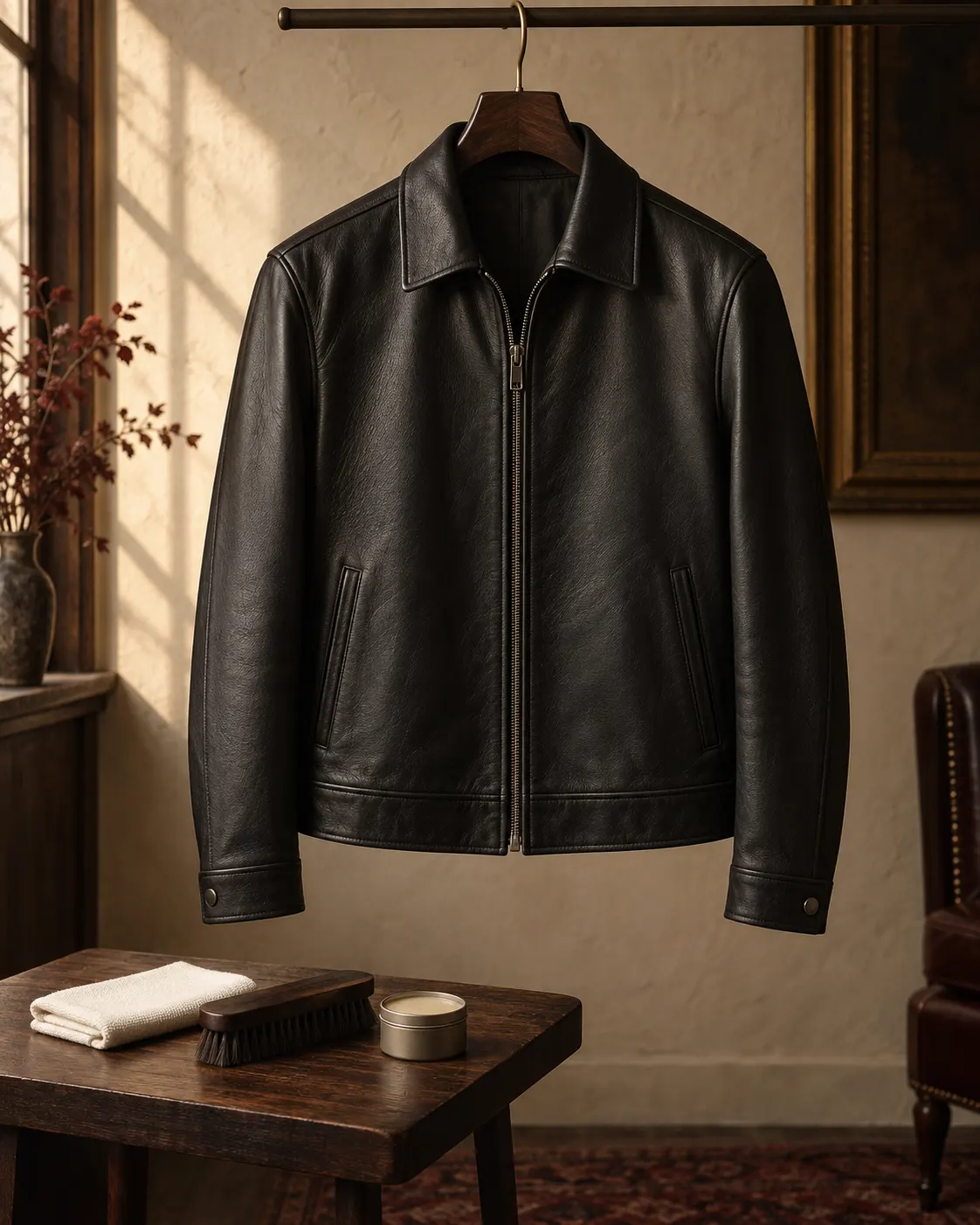
Avoid prolonged rain and never soak a leather jacket for cleaning.
Allow leather to dry naturally, away from radiators, hair dryers and strong sunlight.
Use a broad hanger with enough shoulder support; avoid wire hangers.
Apply only products suitable for the specific leather and finish, after patch testing.
Routine care
Frequent aggressive cleaning can change the surface. Begin with the least invasive method and increase treatment only when the leather genuinely requires it.
Hang the jacket in a ventilated room, away from direct heat and sunlight.
Use a clean, dry, soft cloth; use the correct brush only for compatible suede or nubuck.
Check cuffs, collar, seams and high-contact areas before marks become embedded.
Fasten lightly, hang with space around it and use a breathable garment cover.
If it gets wet
Blot surface moisture with a clean, absorbent cloth—do not rub. Reshape the jacket gently, place it on a broad hanger and leave it to dry at room temperature with natural airflow.
Keep it away from radiators, heaters, fireplaces, hair dryers and prolonged direct sunlight. Concentrated heat can stiffen leather, affect its finish and distort the garment.
Do not apply conditioner while the jacket is wet. Once it is completely dry, inspect the surface. If it feels unusually dry or stiff, seek finish-specific advice before applying anything.
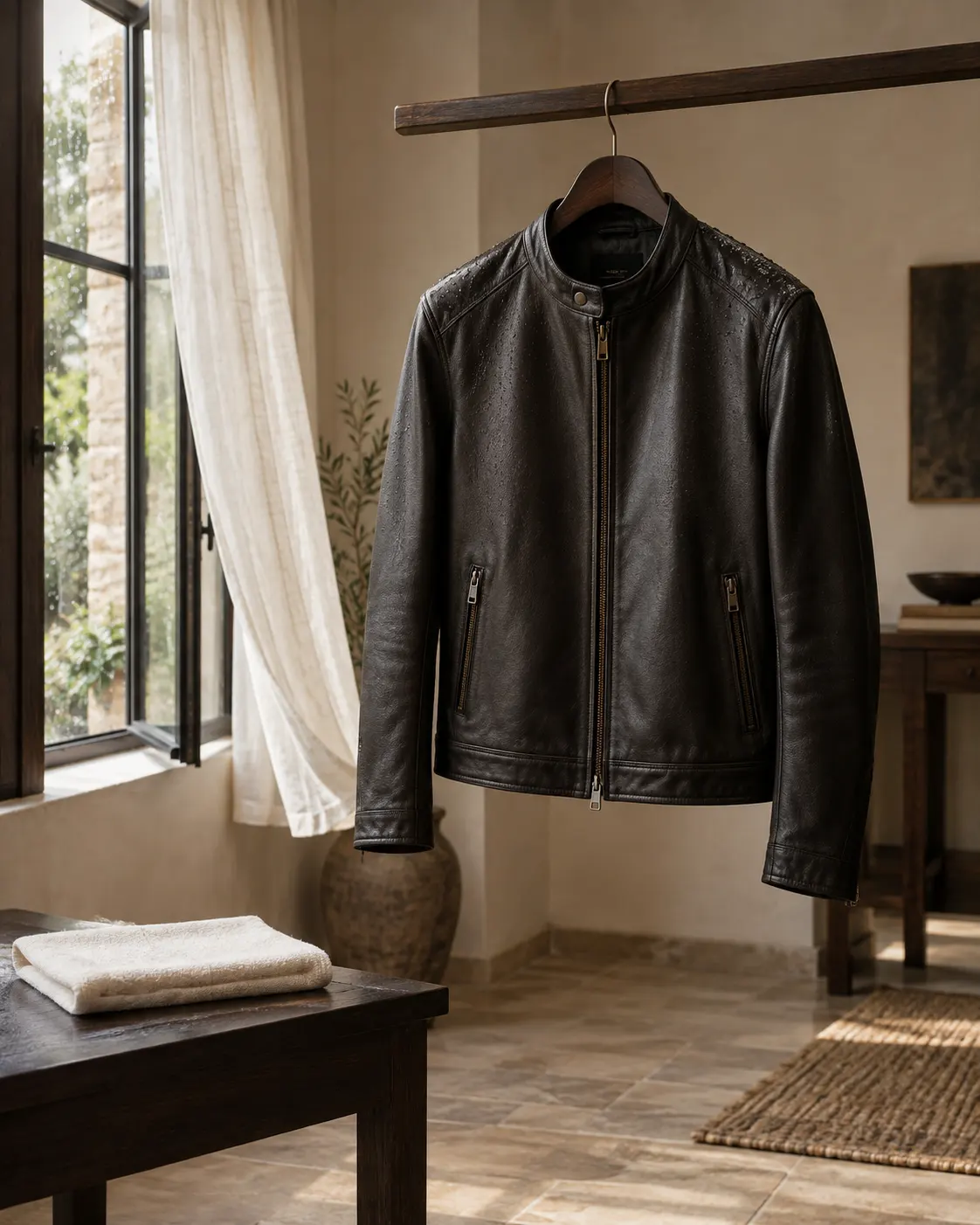
Dry at room temperature with space for airflow—never with direct heat.
Cleaning and conditioning
Start with a dry soft cloth. If the care label permits, use a small amount of cleaner formulated for that leather type, applied to the cloth rather than poured onto the jacket. Work lightly and never saturate the surface.
Condition only when needed, not automatically after every wear. Choose a neutral, finish-compatible conditioner, test it in a concealed area and apply a thin, even amount. Conditioning may deepen or alter colour.
Do not use ordinary smooth-leather creams or oily conditioners. Use a clean brush designed for the material and follow a specialist suede or nubuck method. For oil, dye transfer or significant water marking, consult a professional.
These surfaces are intentionally treated and can change dramatically with cleaning. Do not polish away the intended character. Follow the product-specific instructions supplied with the jacket or ask us before treatment.
Spills and marks
Blot gently and allow the entire affected area to dry naturally. Avoid forceful rubbing, which may change sheen or push moisture into the finish.
Do not add water, household soap or heat. Blot excess carefully without spreading it, then contact a leather-care professional—especially for pale leather, suede or nubuck.
Avoid alcohol, sanitizer, acetone, hairspray and stain removers. These can remove colour or finish. Seek specialist advice as soon as possible.
Do not let deposits build up. Ask a specialist for a method suitable for the exact finish; incorrect wet cleaning can leave rings or uneven colour.
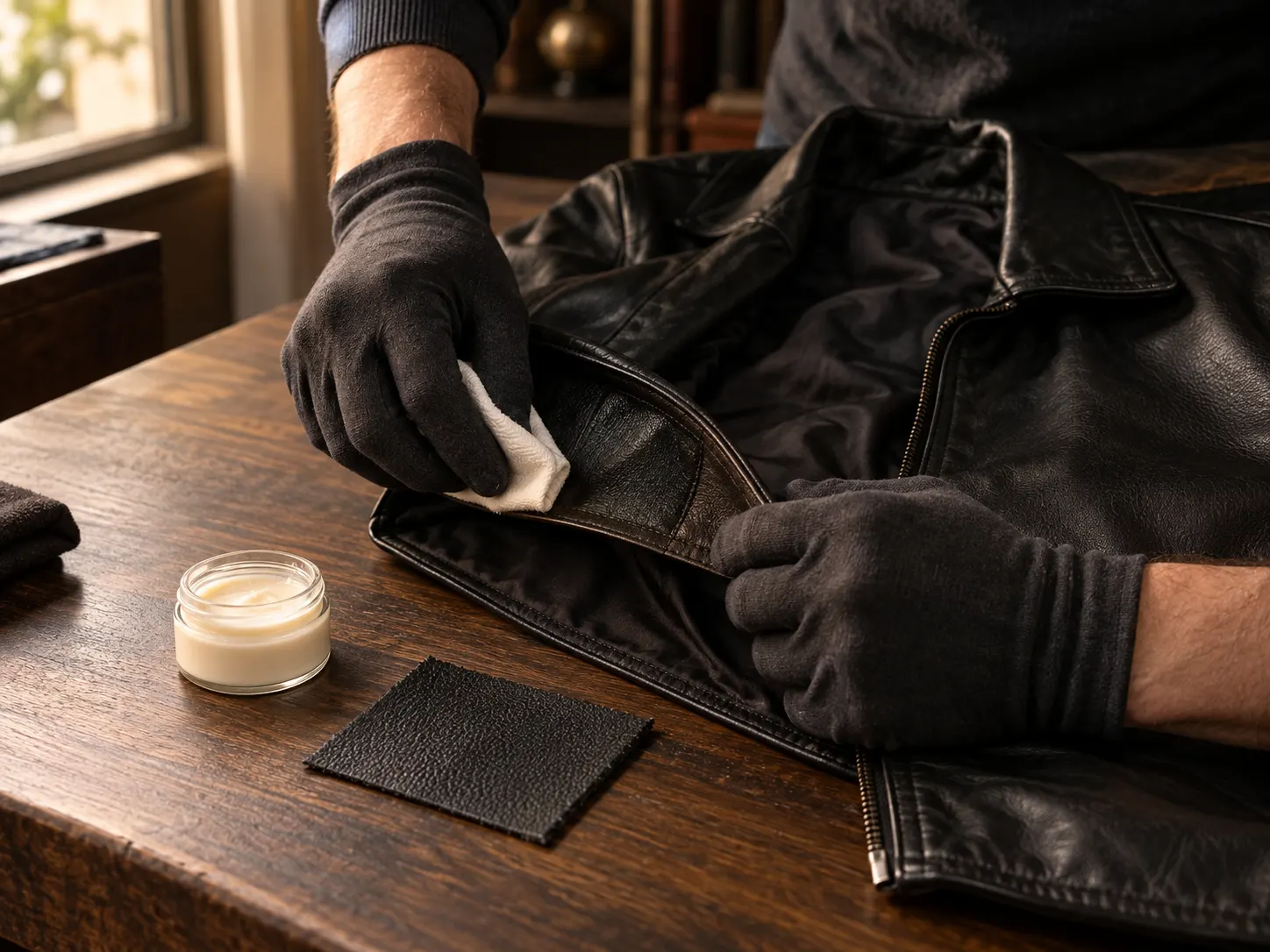
Patch test every cleaner, conditioner or protector before wider application.
Before using a product
Even a product labelled for leather may react differently with dyes, coatings, waxes and surface treatments. Test a very small amount on a concealed area such as an interior facing.
Waterproofing or protector sprays can also alter colour, feel and breathability. They are not automatically appropriate for every jacket.
What to avoid
Avoid bleach, detergent, disinfectant, alcohol, baby wipes and multipurpose cleaning sprays.
Olive, coconut and other food oils can darken leather, oxidize, attract dirt or create uneven patches.
Radiators, tumble dryers, irons and hair dryers can shrink, harden or distort leather.
Do not machine wash or tumble dry unless the garment label specifically states that it is safe.
Avoid long-term storage in sealed plastic. Use a clean, breathable garment cover.
Leather retains needle holes. Use a specialist experienced with leather garment construction.
Long-term storage
Clean only as required and make sure the jacket is fully dry before storage. Empty the pockets, close heavy zippers without pulling the body tight, and support the shoulders on a broad hanger.
Choose a cool, dry, ventilated wardrobe away from direct sunlight. Leave space around the jacket so it is not crushed between garments. Cover it with breathable cotton or a suitable fabric garment bag—not airtight plastic.
Inspect the jacket periodically for moisture, mould, pests, colour transfer or pressure marks. Never fold it for prolonged storage, and keep dark leather from resting directly against pale garments.
Leather care FAQs
There is no reliable universal schedule. Leather type, finish, climate, wear and storage all matter. Condition only when the compatible care guidance recommends it or the leather shows genuine dryness, and always patch test first.
Brief light moisture may be manageable for some finished leathers, but a leather jacket should not be treated as waterproof. Avoid prolonged or heavy rain, and allow accidental moisture to dry naturally.
Normally, no. Water, detergent and tumbling can damage the leather, finish, lining, hardware and structure. Follow the garment label and use a qualified leather-garment cleaner when full cleaning is necessary.
We do not recommend household food oils. They can darken the surface, oxidize, attract dirt and create uneven results. Use only a finish-compatible leather product after testing.
Hang the jacket on a broad hanger and allow minor creases to relax naturally. Do not iron leather directly or apply concentrated steam. Persistent creasing should be assessed by a leather specialist.
No. Gradual softening, tonal variation and surface character can be part of natural wear. Cracking, peeling coatings, torn seams, severe dryness or structural failure are different and require assessment.
Seek professional help for oil, ink, dye transfer, mould, widespread staining, strong odours, pale leather, suede or nubuck, damaged finishes, lining stains, or any issue where home treatment could make the result worse.